
Hardcore OG Strain Review
Modern candy strains get all the attention, and most of them fall apart the second…
Yellow edges creeping across a fan leaf. Rust colored spots that showed up overnight. A new grower’s first instinct is usually to panic and start dumping bottles of nutrients into the reservoir. Stop and slow the f*ck down. Before you touch a single feed schedule, learn to actually read what the plant is telling you, because cal mag deficiency has a specific fingerprint. Mistaking it for something else usually makes the problem worse.
At Zikigai Garden, we’ve learned that concerns about calcium and magnesium hunger come up more than almost any other topic from new hobbyists. It’s an easy issue to misdiagnose because the early symptoms overlap with nitrogen problems, pH swings, and even spider mite damage. Growers panic-feed, overcorrect, and end up chasing a second problem they created themselves. Once you know what calcium starvation looks like versus magnesium starvation, diagnosis gets a lot faster.
Our genetics, from the resin-heavy Georgia Pie line to the flavor-forward Zikigai crosses, tend to be vigorous, hungry plants once they hit their stride in veg and flower. That vigor is exactly why staying ahead of cal mag deficiency matters. A plant that’s pushing hard for structure and trichome production needs a steady mineral supply to keep up. You can browse our current seed lineup to see the kind of heavy feeders we’re talking about. Keep reading and we’ll walk through the causes, the visual signs, and how to correct course before a cal mag deficiency turns into a yield problem.
Calcium and magnesium deficiency shows up across every growing medium, but the root cause shifts depending on setup. In coco coir and hydroponic systems, the growing medium itself contains almost no calcium or magnesium to begin with. Add in reverse osmosis or heavily filtered tap water, which strips out the trace minerals plants would otherwise pull in passively, and you’ve got a setup where cal mag hunger is basically guaranteed unless you supplement from day one.
Soil growers aren’t immune either. Most cal mag issues in soil trace back to pH lockout rather than a true absence of nutrients. Calcium and magnesium become chemically unavailable to roots outside a fairly narrow pH band, generally 6.0 to 7.0 in soil and 5.5 to 6.5 in coco or hydro. Push outside that range and the minerals can be sitting right there in the medium while the plant still shows every symptom of starvation. Overwatering, cold root zones, and salt buildup from heavy synthetic feeding can trigger the same lockout effect.
Calcium and magnesium move through a plant differently, and that difference is the single most useful diagnostic tool you have. Magnesium is mobile. Calcium is not. Once you internalize that, the rest clicks into place fast.
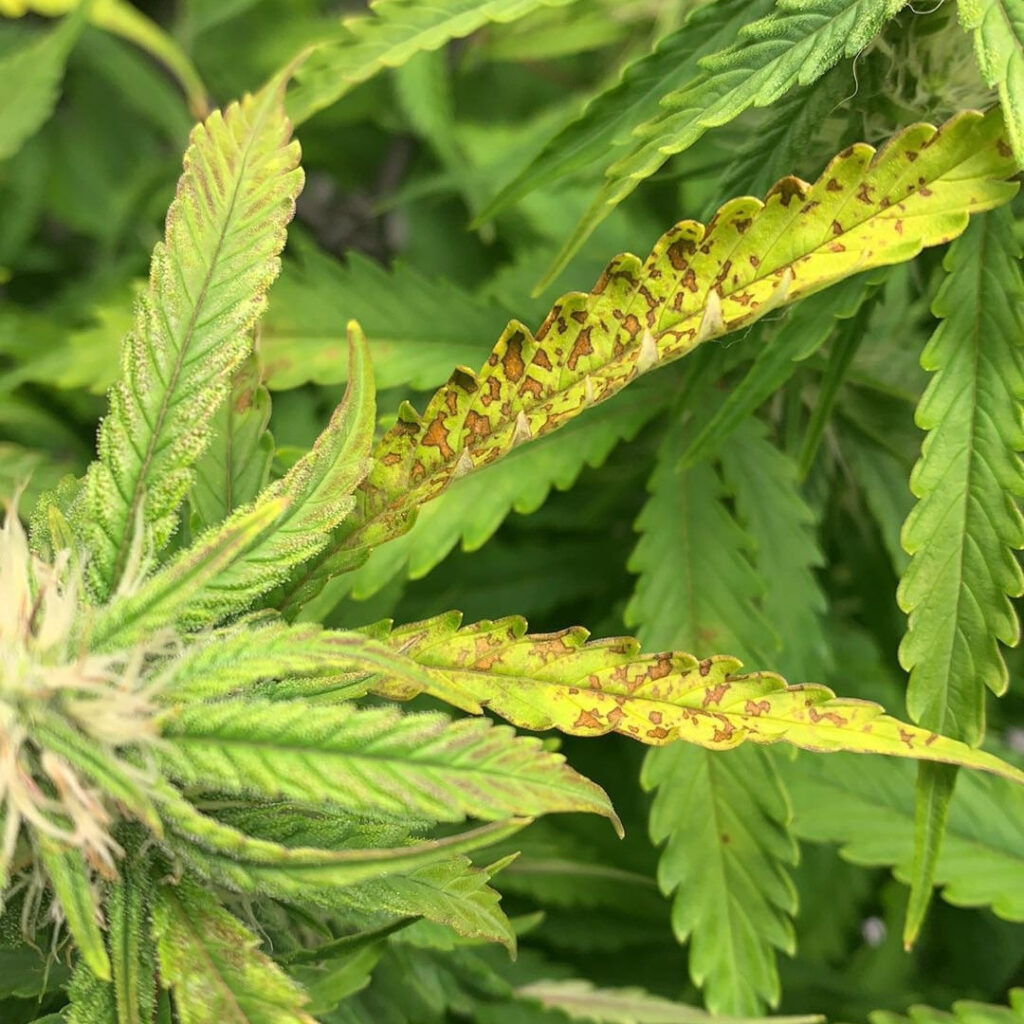
Because calcium can’t relocate once it’s built into plant tissue, deficiency always shows up on new growth first. Watch for curled or twisted new leaves, stunted or distorted growth at the top of the plant, weak stems that seem to snap or bend too easily, and small brown or rust colored spots scattered across leaf surfaces. Root development often slows too, even before you notice much above the soil line.
Magnesium behaves the opposite way. Since the plant can pull it back out of older tissue and shuttle it to new growth, deficiency shows up on the lower, older fan leaves first. The classic tell is interveinal chlorosis: the leaf veins stay dark green while the tissue between them fades yellow, sometimes progressing to rust or brown as it worsens. Researchers studying magnesium deficiency in crop plants have documented this same retranslocation pattern across a wide range of species, and cannabis follows it closely.
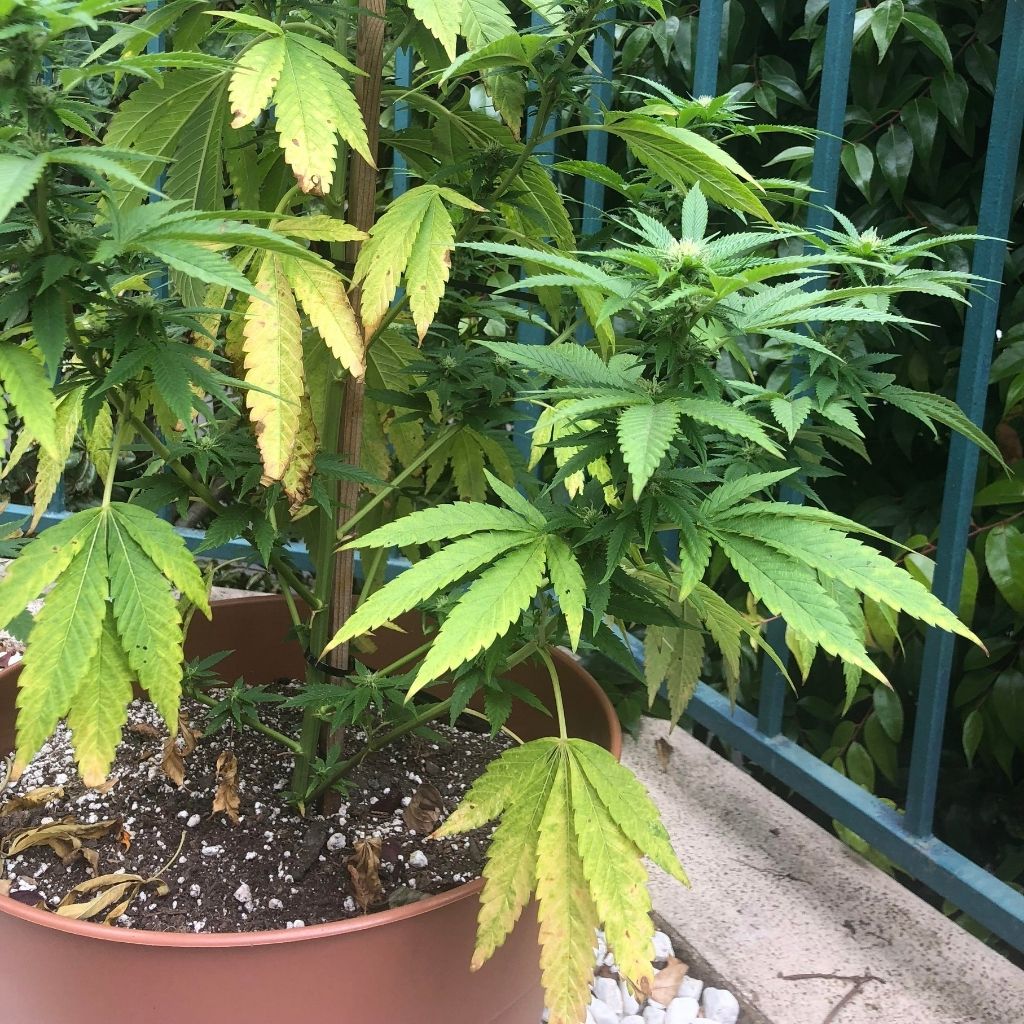
A few lookalikes trip growers up constantly. Nitrogen deficiency also causes yellowing on lower leaves, but it’s a uniform, whole-leaf yellow rather than the vein-stays-green pattern of magnesium hunger. Overwatering can mimic cal mag symptoms by suffocating roots and blocking nutrient uptake even when the mix is dialed in correctly. Spider mites leave stippled, dusty looking damage that’s easy to confuse with early calcium spotting until you flip a leaf and spot the webbing. When in doubt, check your runoff pH before you change anything else. That single number resolves more mystery deficiencies than any bottle of additive ever will.
Correction starts with the water and the pH, not the supplement bottle. Test your source water. If you’re running RO or soft tap water, plan to add a cal mag supplement at every feeding, not just when symptoms appear. Products like General Hydroponics CALiMAGic and Botanicare Cal-Mag Plus are common choices among home growers for exactly this reason, though any reputable cal mag product will do the job when used at label rates.
Dial in your pH range before you assume you need more minerals. A plant sitting in locked-out territory won’t improve no matter how much cal mag you add. Flush lightly if you suspect salt buildup, then resume feeding at the corrected pH. Recent research into mineral nutrition in Cannabis sativa reinforces what experienced growers already know: getting the baseline right during vegetative growth pays off through flower. If you’re starting a new run, our feminized seed lines give you a clean slate to build a feeding schedule around from the seedling stage on, which is always easier than correcting mid-flower.
Prevention beats correction every time. That’s it. Build cal mag into your base nutrient routine in coco or hydro rather than waiting for symptoms, and you’ll rarely need to troubleshoot at all.
Genetics that push hard for resin and flavor ask a lot from your feeding program, and understanding what a hungry plant looks like is part of growing them well. Our carefully pheno-hunted varieties reward growers who pay attention to the details. Browse our latest drops and get on our newsletter for restock alerts and grow tips straight from the team. You can also swing by our Discord to compare notes with other curious home growers and community members working through the same feeding questions.



Modern candy strains get all the attention, and most of them fall apart the second…

The Sunset Sherbet strain aka Sunset Sherbert aka Sherbert is one of those strains that…

The Zikigai Garden team made it to Mary Jane Berlin 2026 for the first time…